Of Barges, Booker Prizes, and the Balance Sheet of Sugar
When I dedicate a book, my children are always first. They have encouraged me, put up with the long stretches when a book takes over my life, and, more than anyone, are the reason I do this work at all—the reason I keep looking beyond what is on the plate or in the glass to the histories, cultures, and people that put it there.
What I did not yet know when I began my third book was that my work as a culinary anthropologist would intersect with a part of their family story. Caribbean Cocktails: Drinks & Bites from the Afro-Latino Diaspora, which I co-authored with Afro-Dominican chef and mixologist Nelson German, would have me following sugarcane from field to mill and molasses to rum—and eventually back to their paternal great-grandfather.
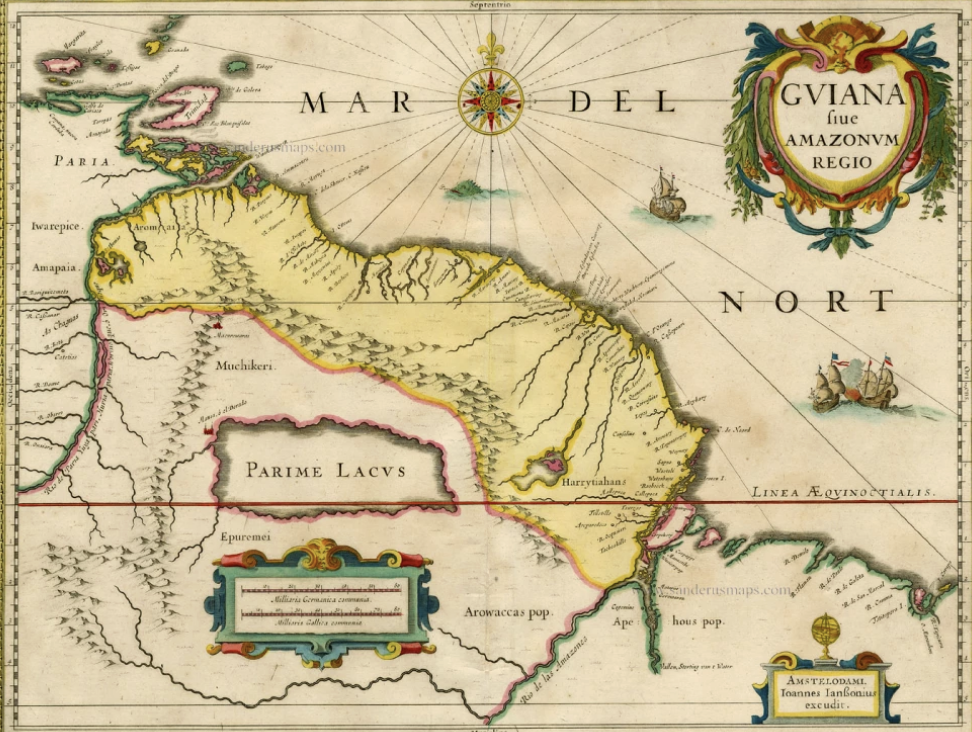
George Gray had a “dangerous” job as the captain of a sugarcane barge in Guyana, so we were told. We never thought that much about why it was dangerous, or even why sugarcane was being transported by barge in the first place. It was simply one of those pieces of family history that just was. What I found when I finally pulled on that thread was not simply an explanation of George Gray’s job, but a history of who built Guyana’s sugar economy, who owned it, and who profited from it—all of which turned out to be a case study in Distillery Justice.
I coined—and first introduced—the term “Distillery Justice” in Caribbean Cocktails to describe the idea that rum’s history—and future—must fully acknowledge the enslaved and their descendants, whose labor and knowledge built the industry—and that the people and communities from which rum derives its value must share in the wealth it creates. The term was inspired by historian and author Michael Twitty’s concept of culinary justice, which holds that recognition is not enough—that oppressed peoples have a right to derive value, uplift, and empowerment from the foodways they created.
George Gray’s story would give Distillery Justice a remarkably literal shape, a shape that took form when I asked why sugarcane was traveling by barge in the first place.
The Landscape Sugar Built
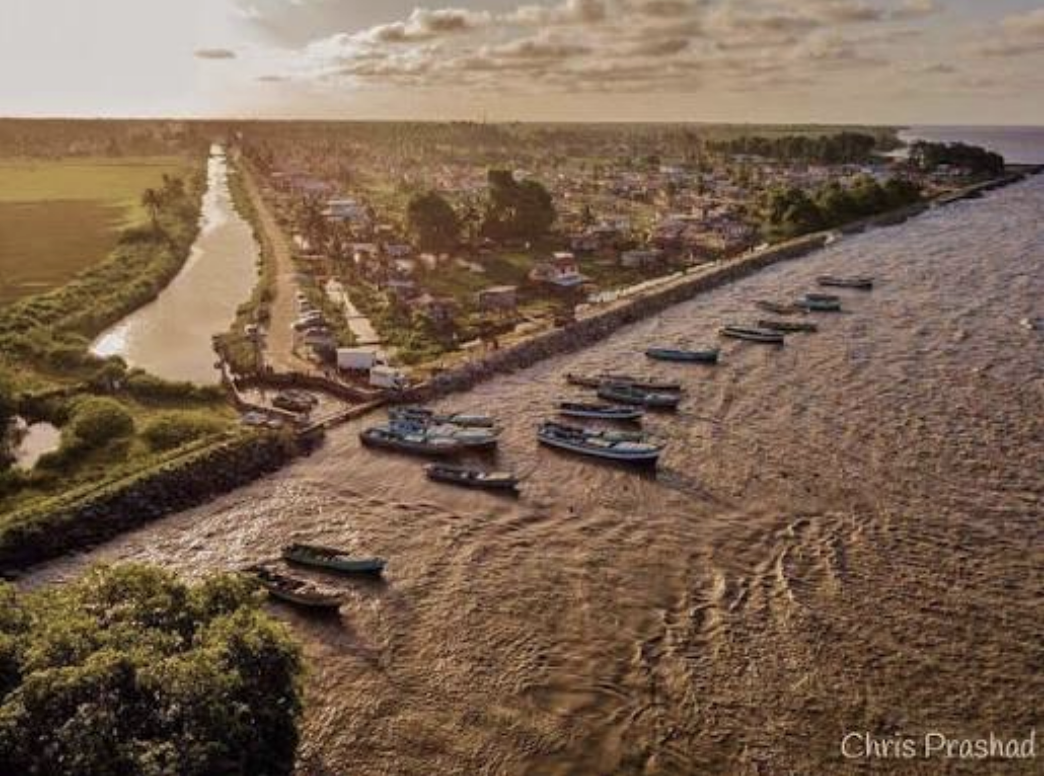
The answer began with the land itself. Much of Guyana’s fertile coastal plain lies at or below sea level at high tide. To grow sugar there, Dutch colonists, drawing on centuries of expertise in controlling water and reclaiming low-lying land, had to build an elaborate system of sea defenses, dams, sluices, and canals to drain and irrigate the plantation land. Enslaved Africans built and maintained that system under Dutch supervision.
To create the plantation landscape in the first place, enslaved Africans moved an estimated 100 million tons of waterlogged clay by hand, digging and maintaining the canals, dams and drainage works that made cultivation possible. The human scale of the sugar economy was equally staggering: tens of thousands of enslaved Africans were brought to the territories that would become Guyana under Dutch rule, followed by 72,371 people trafficked by British slave traders in little more than a decade as British capital transformed the territory into one of the Caribbean’s great sugar producers.
Those same canals also became the transportation network of the sugar industry. Harvested cane was loaded onto flat-bottomed barges known as punts and carried through the waterways to the mills. Generations later, George Gray was captaining a sugarcane through a landscape that had quite literally been engineered for sugar.
Who Owned the Sugar?
But answering why the cane traveled by barge only opened a larger question at the heart of the concept of Distillery Justice: who owned the sugar—and who profited from everything this extraordinary system made possible?
By the time Guyana won independence from Britain in 1966, much of its sugar industry was still controlled by the British company Booker McConnell—the very same Booker that would later sponsor the highly respected literary award that bears its name, the Booker Prize. Today, the Booker Prize openly acknowledges that the company’s wealth was built in part through Guyana’s plantation economy and the labor of enslaved people. That willingness to name where the wealth came from matters—but by the measure of Distillery Justice, acknowledgment is only the beginning. The harder question is what happened to the value those industries continued to create.
That same pattern of extraction carried into Guyana’s rum industry. At independence, its distilling companies were still entirely owned by British companies, including Booker, and much of the rum produced there left the country in bulk; to be bottled, branded, and sold elsewhere. Guyana supplied the sugar, the molasses, the rum, and the labor; much of the value created from them still flowed outward.
Independence had changed who governed the country. It had not yet changed who owned its wealth.
That began to change a decade later. In 1975 and 1976, Guyana nationalized the British-owned sugar estates, including Booker’s vast holdings, bringing them together under the state-owned Guyana Sugar Corporation, or GuySuCo. For the first time, the land generations of Guyanese had worked, and the factories and infrastructure they had built were no longer owned from London.
This is the other half of Distillery Justice: not simply acknowledging who created the value, but changing who gets to own it.
Beyond Guyana
Guyana is hardly top of mind when most people think of Caribbean rum; I began there because family history took me there. But Guyana is only one example. Across the Caribbean, rum shares a foundational history. The spread of sugarcane cultivation across the region led directly to rum production: molasses, the thick syrup left behind in processing sugar, became the essential raw material for most rum. As we wrote in Caribbean Cocktails, “Without chattel slavery, there was no sugar—and since it’s essentially a byproduct of sugar, the same can be said for rum.” Enslaved Africans forced to work in the cane fields and sugar mills also played a central role in rum’s development, bringing and adapting fermentation knowledge from African traditions of palm wine and sorghum beer.
But from that shared history emerged distinctly different rum cultures. And who tells those stories matters: a culture looks different when it is described by someone living inside it rather than through an outside lens. Joy Spence, the legendary Jamaican master blender behind Appleton Estate, describes Jamaicans as proud, determined, bold and passionate. “Rum is an expression of that culture,” she says. Barbados became known for balanced rums, Jamaica for bold, intensely flavored ones; Cuba, the Dominican Republic, and Puerto Rico developed lighter styles, while Haiti, Guadeloupe, and Martinique developed traditions around rhum agricole, made from fresh sugarcane juice rather than molasses.
Reclaiming Rum’s Story
For too long, rum has been marketed as exotic and escapist, disconnected from the people who cultivated the cane, fermented the molasses, distilled the spirit, and built the industry around it. Distillery Justice asks us to put those people—and their labor, knowledge, culture, and history—back at the center of the story, not simply by acknowledging their contributions, but by recognizing their right to share in the value rum continues to create.
Some producers are already doing that work. Trinidadian entrepreneur Marc Farrell founded Ten to One Rum in part to challenge the old clichés of Caribbean rum—the pirates, plantations, and tropical escape—and replace them with a story centered on contemporary Caribbean culture. Ian Burrell, the British rum expert who describes himself as African-Caribbean, and who co-founded Equiano Rum, took a different route, naming the brand for Olaudah Equiano, the Nigerian-born abolitionist who survived enslavement and later bought his freedom in part through trading rum. This is the deeper shift: to understand rum as an expression of the people, histories, and cultures that made it, rather than a commodity. This is the work of Distillery Justice.
Bottled Justice
Brazil offers perhaps the clearest evidence that Distillery Justice as a concept extends beyond the Caribbean. In December 2025, lawmakers in the Brazilian state of Minas Gerais convened a public hearing specifically to recognize the Black labor, knowledge, and technologies that shaped the production of cachaça, Brazil’s native sugarcane spirit and rum’s close cousin, distilled from fresh cane juice rather than molasses. The conversation went beyond historical credit to economic inclusion: how could the communities that preserved those traditions participate more fully in the value cachaça creates today?
Among the Quilombola of Pontinha (in Minas Gerais), Renato Gonçalves goes one step further, bringing the idea of Distillery Justice to life. The Quilombola are an Afro-descendant people rooted in resistance to slavery. Their history echoes that of the Maroons of Jamaica, the cimarrones of the Dominican Republic, and the palenques of Mexico—communities created out of a fight for survival, autonomy, and control over their own lives. Gonçalves produces the artisanal cachaça Pontinha da Cana, turning that history of self-determination into economic agency: creating and owning a product whose value comes from Black knowledge, labor, and culture.
In Haiti, Rhum Barbancourt offers a different model. Founded in 1862 by the French-born Dupré Barbancourt, the company is now wholly controlled by fifth-generation Haitian owner Delphine Gardère. Its rum is produced in Haiti, while hundreds of employees and thousands of local cane growers participate in the economy it creates. Through the Barbancourt Foundation, some of that value flows back into the surrounding community through a 24-hour health clinic, scholarships, education, arts, and youth programs.
Distillery Justice does not require a spotless origin story; few sugarcane spirits could provide one. It asks what happens to the value being created now—and who gets to participate in it.
Bottles That Pass the Test
Navèt 1804 — Haiti. Navèt produces clairin—Haiti’s traditional, generally unaged spirit distilled from fermented sugarcane juice or syrup—working with farming cooperatives in Léogâne that support more than 250 farming families.
Saint Benevolence — Haiti. Co-founder Gueillant Dorcinvil is a third-generation Haitian sugarcane farmer and clairin producer from Saint-Michel-de-l’Attalaye. Proceeds help fund Haitian cancer care and other medical services; farmers and production workers receive health benefits, and their children receive help with education costs.
Ak Zanj / San Zanj — Haiti. Produced by Haitian family-owned Berling S.A., whose rum-making lineage dates to 1862, these rums are sourced, blended, bottled, and increasingly distilled in Haiti. San Zanj also incorporates clairin from small Haitian distilleries, keeping both expertise and more of the finished-product value in Haitian hands.
Boukman Botanical Rhum — Haiti. Boukman is distilled and bottled entirely in Haiti by local family-owned companies, using cane from a farmers’ cooperative; even its bottle decorations are made by a Port-au-Prince cooperative. Ten percent of profits support Haitian-led education programs.
Ten To One — Caribbean. Trinidad-born founder Marc Farrell created Ten To One to move Caribbean rum beyond pirates-and-tropical-escape imagery and let contemporary Caribbean culture define the story instead. Blended from rums produced across the Caribbean, the brand Black ownership and Caribbean leadership—and control over how Caribbean rum is presented and sold to the world—in Black Caribbean hands.
Equiano — Mauritius/Barbados. Co-founded by African-Caribbean rum expert Ian Burrell, Equiano celebrates the legacy of abolitionist Olaudah Equiano, who survived enslavement and became one of the eighteenth century’s most influential voices against the slave trade. The connection is also economic: the company commits 5 percent of global profits to organizations working for freedom and equality.
Foursquare / R.L. Seale — Barbados. Foursquare is a fourth-generation, 100-percent Barbadian family-owned independent producer that distills, ages, and bottles on the island. CEO and head distiller Richard Seale has also argued against the old colonial model of exporting bulk rum while the greater profits from aging, branding, and bottling are captured elsewhere.
Worthy Park — Jamaica. Jamaican-owned and Jamaican-made, Worthy Park keeps an unusual amount of the production chain at home: growing cane, milling it to produce sugar and molasses, fermenting, distilling, aging, blending, and bottling on the estate; making sure that more of the value created by Jamaican rum remains in Jamaica.
Appleton Estate — Jamaica. Appleton has changed hands many times over its long history and has been owned by Italy’s Campari Group only since 2012. Its rum is made and aged in Jamaica and its identity and expertise remain deeply Jamaican—most notably through master blender Joy Spence. Campari has also invested substantially in Jamaican production and community programs, so its inclusion here rests on Jamaican production, expertise, and reinvestment rather than local ownership.
El Dorado / Demerara Distillers — Guyana. After independence, Guyana’s rum industry moved from British to Guyanese ownership, and Demerara Distillers shifted from supplying much of its rum in bulk toward building globally valuable brands of its own.
El Dorado brings us back to the question that began with George Gray’s barge: who gets to own the value after the cane leaves the field?
Epilogue- What’s In Your Glass
If knowing the story behind the bottle changes what you see, maybe it should also change what you pour.
Inspired by historian and author Michael Twitty’s concept of culinary justice, the framework considers questions of historical truth, recognition, cultural ownership, and who benefits from the value created by a spirit and its story.